Frankie Müller · 23 September 2026
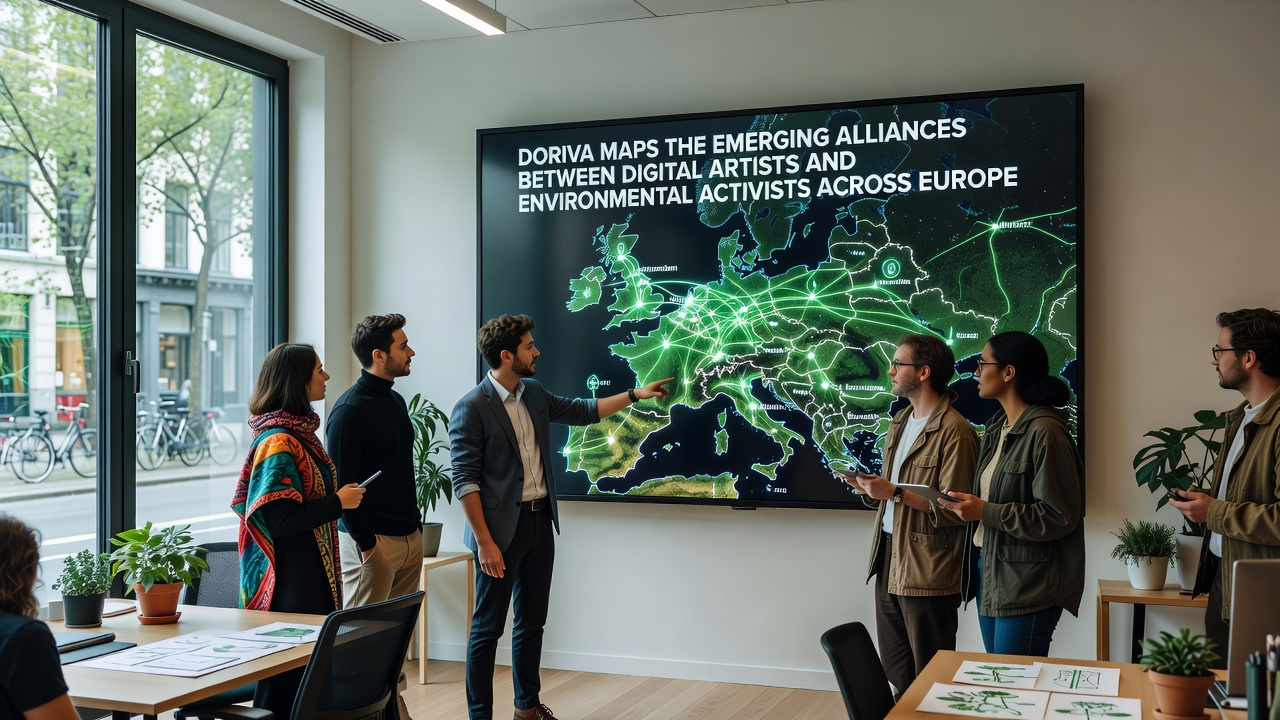
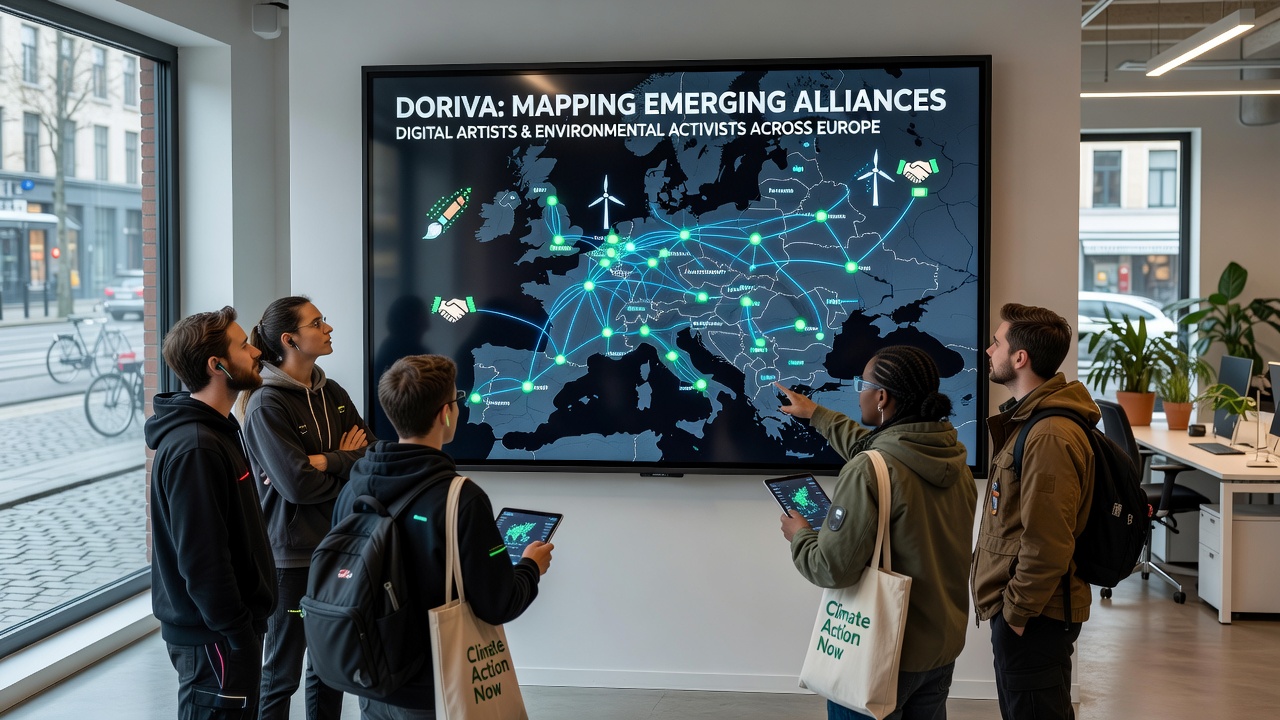
Doriva Maps the Emerging Alliances Between Digital Artists and Environmental Activists Across Europe
Digital artists and environmental activists have formed partnerships across multiple European countries, and these connections rely on shared platforms that combine visual technology with campaign messaging. Research from various academic institutions shows that such collaborations increased in frequency between 2023 and 2025, particularly in urban centers where both groups already maintain active networks.
Geographic Spread of Partnerships
Projects have appeared in cities including Berlin, Amsterdam, Barcelona, and Copenhagen, while similar efforts have taken shape in smaller towns in Scandinavia and the Baltic region. Data from the European Environment Agency indicates that digital installations addressing climate topics received funding support from regional cultural programs in at least twelve member states during the past two years. These initiatives often combine real-time data visualizations with on-site activist events, allowing participants to display changing environmental metrics through interactive displays.
One study conducted by researchers at the University of Helsinki documented thirty-seven distinct collaborations in Northern Europe alone between January 2024 and June 2025. The projects ranged from mobile applications that track local pollution levels to augmented-reality experiences that overlay historical forest coverage onto current city landscapes.
Tools and Methods Employed
Participants use open-source software, projection mapping systems, and blockchain-based verification tools to create and distribute content. Activists supply field data collected through sensor networks, and artists translate that information into visual formats that appear at public demonstrations or online exhibitions. In several documented cases, teams coordinated across borders using shared cloud platforms that allow simultaneous editing of visual assets.
September 2026 has been identified as a period when multiple festivals will host joint presentations, with events already scheduled in Rotterdam and Lyon. Organizers have reported that these gatherings will feature live data feeds from environmental monitoring stations paired with generative art sequences that respond to the incoming numbers.
Funding and Institutional Support
European Union cultural grants have supported several of the larger installations, while national arts councils in France and Germany have provided additional resources for smaller-scale works. A report released by the European Commission in early 2025 noted that cross-sector projects combining digital media and environmental themes accounted for roughly eight percent of all funded cultural initiatives that year. Private foundations focused on climate issues have also contributed equipment and technical expertise to artist-activist teams.
Those involved often cite the need for accurate data representation as a primary motivation for working together. Sensor readings from river monitoring stations or air quality devices become the basis for animations that appear on public screens or within virtual reality environments accessible through mobile devices.
Examples of Specific Projects
In one instance, a collective based in Porto partnered with local water conservation groups to produce an installation that projected river flow data onto building facades along the Douro riverfront. The same group later adapted the system for use in Lisbon, where it incorporated ocean temperature readings supplied by marine research vessels. Another project in Warsaw integrated satellite imagery with community-collected noise pollution data to create interactive maps displayed during public gatherings.
Observers note that these efforts frequently result in permanent digital archives that remain available after the physical events conclude. The archives allow subsequent researchers to examine both the artistic outputs and the underlying environmental datasets in combined formats.
Conclusion
Current patterns indicate that alliances between digital artists and environmental activists will continue to expand into additional regions of Europe, supported by existing funding structures and technical infrastructure. Records maintained by cultural institutions show steady growth in the number of joint applications submitted for grants that require both creative and scientific components. As sensor networks become more widespread and visualization tools grow more accessible, the volume of shared projects appears positioned to increase further in the coming years.